Faculty
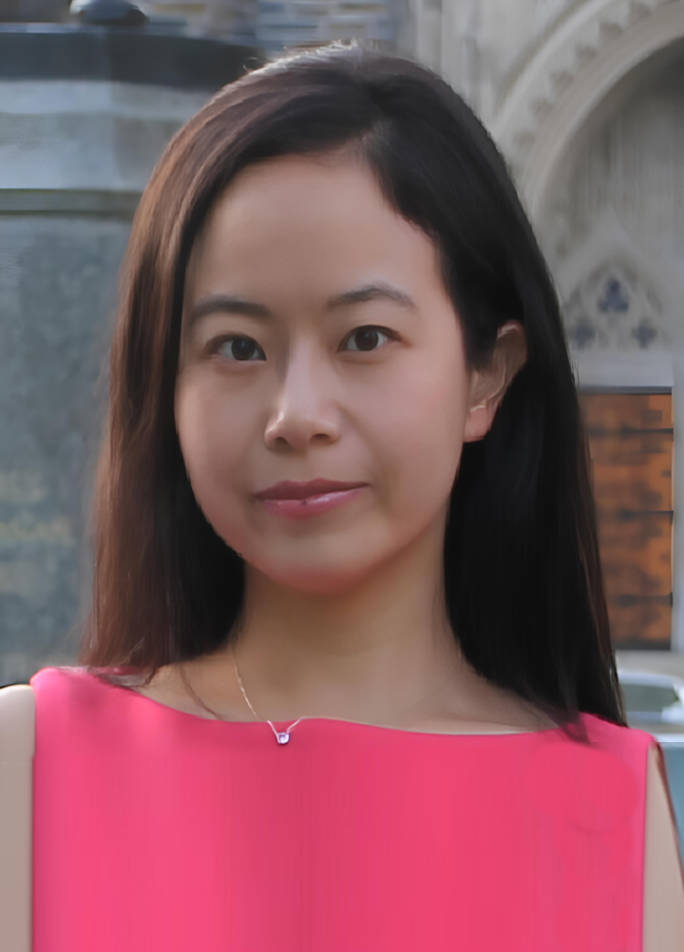
ZHU Yinging
Title:Group Leader
Subject:
Email:
Address:190 Kaiyuan Avenue, Guangzhou Science Park, Huangpu District, Guangzhou
Study/Work Experience
Dr. Zhu has published more than 30 papers in top-tier international conferences and journals, including IEEE Transactions on Pattern Analysis and Machine Intelligence (TPAMI), Conference on Computer Vision and Pattern Recognition (CVPR), AAAI Conference on Artificial Intelligence (AAAI), Conference on Neural Information Processing Systems (NeurIPS), ACM SIGKDD Conference on Knowledge Discovery and Data Mining (KDD), International Conference on Medical Image Computing and Computer-Assisted Intervention (MICCAI), Medical Image Analysis (MedIA), and IEEE Transactions on Medical Imaging (TMI), among which 7 papers are in Q1 top journals. Her research achievements have been widely cited, with more than 1,700 total citations on Google Scholar and an H-index of 26.
She has led and participated in a number of research projects, including those funded by the U.S. National Science Foundation (NSF) and the U.S. National Institutes of Health (NIH). Her representative works published in CVPR and TPAMI have received over 100 citations each.
Dr. Zhu also serves as a Senior Program Committee Member for international conferences such as CVPR, MICCAI, ECCV, and AAAI, as well as a reviewer for journals including IEEE TMI, MedIA, and IEEE TIP. She has been invited to give keynote talks on medical multimodal models at CVPR 2021 and MICCAI 2023 Industry Talk, demonstrating significant academic influence.
Research Areas
The research group focuses on multimodal intelligence in medicine and life sciences, centered on large models and agent platforms. By integrating interdisciplinary methodologies including computer vision, 3D image computing, genomics, spatial multi-omics, reinforcement learning, and causal inference, it constructs an intelligent computing system for medicine, biology, and drug discovery.
- Multimodal Image × Text × Large Language ModelsDevelop image–text foundation models (VLM/LLM) based on medical, pathological, and biological imaging; build multi-agent systems for cross-modal retrieval, question answering, report generation, quality control, and knowledge provenance.
- Spatial Multi-omics × Advanced Imaging × Multimodal Foundation ModelsIntegrate cryo-electron microscopy, super-resolution microscopy, and spatial multi-omics for cross-modal modeling and representation learning; construct image–omics computational agents for precision medicine and drug screening.
- AI-enabled Veterinary Drug DesignPerform transfer design and intelligent evaluation of antibodies and vaccines for pets based on human antibody drug knowledge bases and generative protein language models.
- Intelligent Processing Platform for Multimodal Electron MicroscopyDevelop automated segmentation, recognition, annotation, registration, and knowledge extraction systems for EM/optical data to improve efficiency in basic biological research and reshape scientific workflows.
- Imaging Physical Modeling × Deep Learning OptimizationPerform system optimization based on high-resolution 3D diffraction imaging and deep learning for the intelligent collaborative design of organoid toxicology, high-throughput drug screening, and live-cell/organoid printing platforms.
Academic Performance
Representative Papers
For details: https://scholar.google.com/citations?hl=en&user=PMjtni8AAAAJ&view_op=list_works&sortby=pubdate