A new frontier in cryoEM: Towards bioenergetics through structural ensembles
Jose Maria Carazo
Spanish National Center for Biotechnology
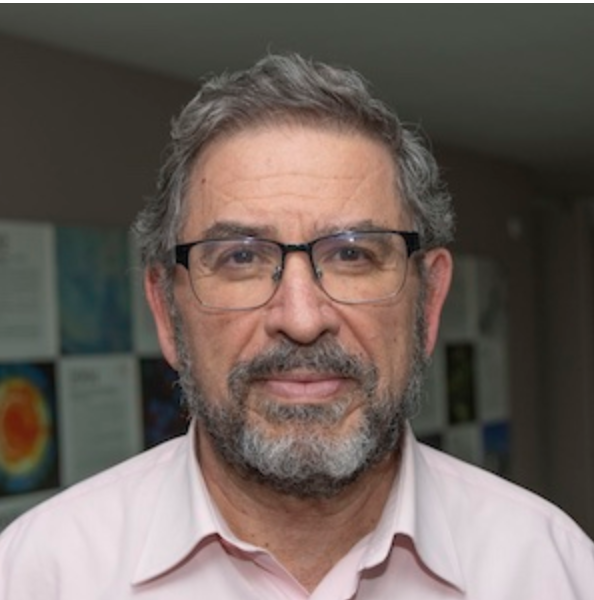
Prof. Jose Maria Carazo directs the BioComputing Unit of the Spanish National Biotechnology Centre in Madrid. He develops image-processing methodologies for cryogenic electron microscopy (cryoEM). His contributions have been key to developing many of the algorithms used to generate most cryoEM maps to date, and to the launch of the EMDB database as European coordinator of the BioImage project in the nineties. He has received more than 14000 citations (Scopus), with an h-index of 58. Recently, he received the 2026 European Ivano Bettini Award on Integrative Structural Biology, the 2025 Eduard Kellenger Medal from the International Federation of Microscopy Societies, and the Spanish National prizes in Biophysics and Computational Biology. He currently serves as Chairman of the Council of the European Research Infrastructure Consortium in Structural Biology and as co.Editor-in-Chief of the Journal of Structural Biology.
Cryo electron microscopy (cryoEM) provides information in the form of images of individual macromolecules, whether in vitro or in cell biological systems. This specific feature allows the development of methods that aim at deriving structural ensembles organized in a pseudo conformational landscape, so that data can be explored beyond their clustering in a few stable conformational classes, as currently commonly done using our approach (Scheres et al., Nat.Meth, 2006, 4:27). In this work we will present recent advancements of HetSIREN (Herreros et al., Nat.Comm. 2025 16:3751), and ReconSIREN (https://www.biorxiv.org/content/10.64898/2026.10.03.756391v1.article-info) including disentangle non structural variables from the pseudo conformational maps (like 3D pose and CTF), expanding to tomography data and further structural constraints. We will finish with a general overview of the field of continuous classification, highlighting the coming possibilities and the current bottlenecks.
Attachment Download: